What does the pensions dashboard mean for transfers and pot consolidation?
Smart UK CEO Jamie Fiveash led the conversation on two important topics at the Professional Pensions Defined Contribution Conference, and here are the key takeaways
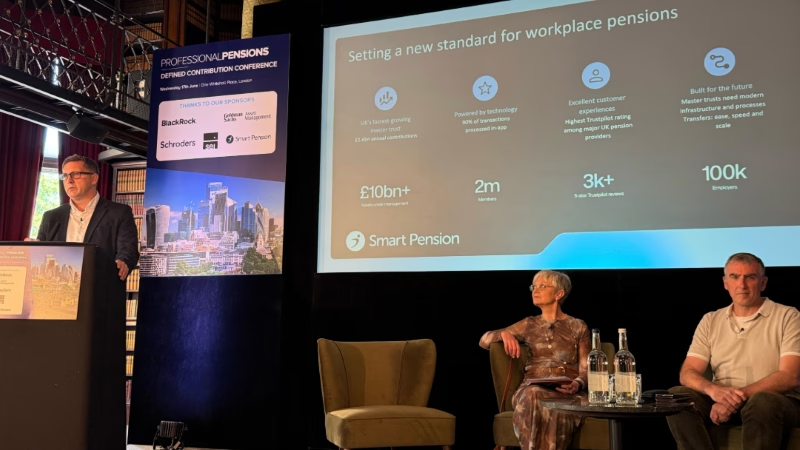
The UK pensions industry is approaching a period of significant transformation. With the introduction of pensions dashboards and an increasing focus on transfers, the way savers engage with their pensions is set to change.
These themes formed the basis of the panel discussion, The Dashboard, Transfer and Small Pots: DC Consolidation in Practice, at the Defined Contribution Conference.
Bringing together industry leaders Jamie Fiveash, CEO of Smart UK, Kim Gubler, President of the Pensions Administration Standards Association (PASA), and independent pensions professional Richard Smith, the session explored what the next phase of pensions consolidation could look like, the impact of the dashboard on member behaviour, and much more.
The current situation
Kicking off the panel, Fiveash highlighted that there are currently around 52 million defined contribution (DC) pots, with around a million new small pots being created every year. Of this 30 million are small pots (below £10,000) and 18,000 are below £1000. Small pots are increasing in excess of 1 million every year.
While the number of pots are increasing, so are transfer volumes. There are 1.8m automated transfers per year alone and these numbers are expected to increase significantly with the introduction of the pensions dashboard - some are predicting a further 8 fold increase. Today, the total cost of processing a transfer is between £80 and £300, meaning the industry could be spending over £1billion a year on processing transfers very soon. Alongside ongoing criticism of the speed of transfers and consumers making poor consolidation decisions, the business case for significant change to the current transfer technology, infrastructure and governance is clear.
The dashboard pulls all pension information together so that customers can see exactly what they have saved, making it easier to track lost pots and plan for retirement. By 31 October 2026, all UK pension providers and schemes are legally required to connect to the central ecosystem.
During this panel discussion, industry experts focused on how member behaviour might change following this legislation, the next steps for small pot consolidation and how to optimise system changes.
Changes in behaviour and the next steps
There is an expectation that seeing pots and savings all in one place will generate significant transfer activity, but independent pensions professional Richard Smith doesn’t necessarily agree, saying that he doesn’t expect there to be a big uptick in demand.
“I don’t expect the majority of consumers’ behaviour to change, at least not much, or initially. Rather, I expect awareness to change, confidence to grow and trust to build.”
Kim Gubler's message was clear too, saying that the industry now needs to move from planning to action.
She highlighted a federated model as the most likely solution for implementation but added that the pensions transfer infrastructure could pose a challenge.
The panel agreed that the current system is not equipped to handle the scale of transfers that small pots consolidation will create. As Gubler put it: “There are big challenges in today's transfer system. If small pots consolidation is successful, transfer volumes will increase significantly, so scalability can’t be an afterthought.”
Underlying all of this is the need for better data. The panel emphasised that any future consolidation model should rely on highly accurate member matching and consistent standards across the industry.
Approaching the future of consolidation
When asked how the pensions industry can optimise system changes, the panel discussed the need to get better at data.
Smith said: “Firms can’t offer a meaningful default pension income unless they know what else the consumer has got. So they will send members to the MoneyHelper Dashboard consenting for Claude to read their data.”
Gubler highlighted that employers need to be held accountable for the data they provide, while the entire panel agreed that in order to get customers to consolidate pots, pension providers must prioritise trust and ease.
On a final note, the industry experts reminded attendees that retirement looks different for everyone nowadays, so it’s crucial that the industry understands where customers are in life and what they require from their pension. Only then will customers want to consolidate their pensions with a certain provider.
About Smart Pension
Launched in 2015, Smart Pension now exceeds £10bn in Assets Under Management (AUM) and serves 2 million members and 100,000 employers. It is powered by Keystone, Smart’s global savings and investments technology platform.
Aquiline, Barclays, Chrysalis Investments, DWS Group, Fidelity InternationalStrategic Ventures, J.P. Morgan, Legal & General Investment Management, MUFG and Natixis Investment Managers are all investors in Smart Pension.



(No%2520Text).avif)